
Beef cheeks are the best-kept secret in Australian butchery. Cheap, ugly, full of connective tissue, and absolutely transcendent after three hours in the oven with red wine and root vegetables. They go from chewy and gnarly to fall-apart-tender, with a sauce so glossy and dense you’ll want to drink it from the pan.
This is the Aussie winter dinner-party recipe that lets you look like a chef without doing chef work. Twenty-five minutes of actual hands-on time. The rest is the oven doing the slow magic while you live your life.
Why beef cheeks beat brisket here
Beef cheeks are mostly connective tissue with a small amount of muscle. After three hours of slow cooking, all that collagen breaks down into gelatin, which is what gives the sauce its body and the meat its silky texture. Brisket has more muscle and less collagen; you get good results but not the same buttery silk.
If your butcher doesn’t have cheeks, ask them to order some. They’re cheap (often $15-20 a kilo) and most stock arrives within a few days.
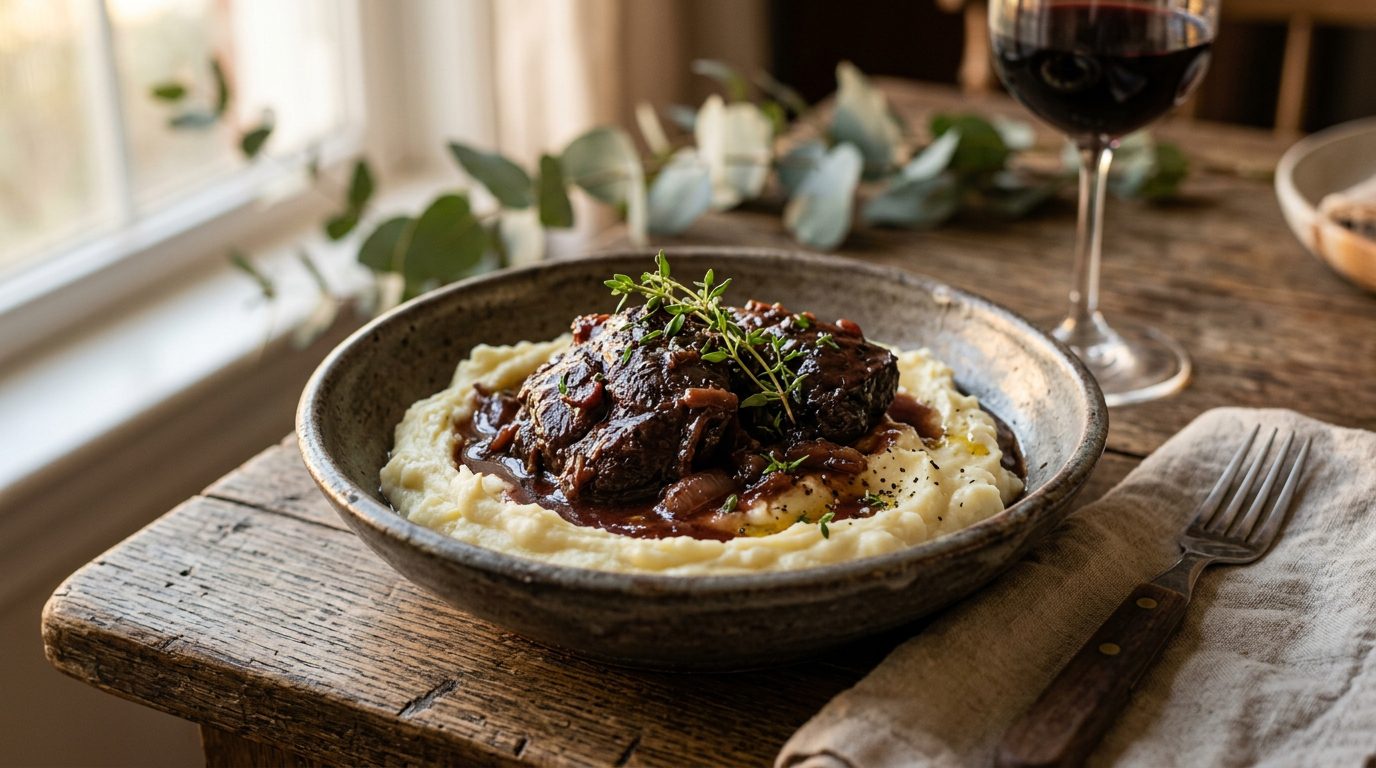
Slow-Cooked Beef Cheeks in Red Wine
Ingredients
- 1.5 kg beef cheeks, trimmed of silverskin
- 3 tbsp plain flour
- 3 tbsp olive oil
- 1 large brown onion, diced
- 3 shallots, halved
- 4 cloves garlic, crushed
- 2 carrots, thick chunks
- 2 sticks celery, sliced
- 2 tbsp tomato paste
- 500 ml dry red wine shiraz or cabernet
- 500 ml beef stock
- 3 sprigs fresh thyme
- 2 bay leaves
Instructions
- Preheat oven to 160°C (320°F). Toss beef cheeks in flour with salt and pepper.
- Heat 2 tbsp oil in a heavy oven-safe pot over medium-high heat. Brown the cheeks 4-5 minutes per side, working in batches if needed. Set aside.
- Add remaining oil. Cook onions, shallots, carrots, and celery 8 minutes until softened and lightly caramelised. Add garlic, cook 1 minute.
- Stir in tomato paste, cook 2 minutes. Pour in red wine, scraping the bottom of the pot. Reduce by half, about 5 minutes.
- Return beef cheeks to the pot. Add stock, thyme, and bay leaves. The liquid should come about three-quarters up the cheeks.
- Cover with a lid. Transfer to the oven. Cook 2.5 to 3 hours, until the meat falls apart at a fork's touch.
- Remove cheeks carefully (they're delicate by now). Reduce the braising liquid on the stove over medium-high heat for 10 minutes until glossy and thick. Strain if you want a smoother sauce.
- Serve cheeks over creamy mashed potato, generously spooned with the sauce. Garnish with fresh thyme.
Nutrition
Notes
Loved This Recipe?
You'll love my Recipe Books!The serving plate matters
Wide shallow bowl, not a flat plate. The mash sits in a pool, the cheek sits on the mash, the sauce gets ladled over the top, and the bowl catches every drop. A flat plate loses the sauce to the table edge, which is a tragedy.
Serve with a glass of the same red wine you used to cook it. Steamed greens or roast carrots on the side. A loaf of crusty bread for sauce-mopping. Eat slowly. Talk to people. This isn’t a Tuesday recipe.